How to Save a Life

Click the title to read more. Visit Ask Anna Page to find out how to ask! Follow MP on Socials too.


Losing someone we love is never easy, and it's especially heartbreaking when it's due to mental health struggles. My friends and I recently lost someone special, and it's made us realize how important it is to talk about mental health and support those around us.

When someone is battling Depression, it's difficult to know what they're going through or how they're interpreting things. False evidence can appear real, and the PAIN they feel is OVERWHELMING and VALID. If we could take the weight off his shoulders or burden off his heart, we would. But the truth is, our loved one wouldn't want us to dwell on what-ifs or the past. He'd want us to remember him with love and joy, and to help others overcome their own battles with mental health.

So, what can we do? First, let's start by accepting the situation and acknowledging what the person is going through (with sensitivity and without judgments, please). Let's be aware of the signs that someone might be struggling:

Stop Feeling Guilty for Taking a Well-Deserved Break


It's been a while since I've had the luxury of time to pour my thoughts out in an expressive post. You see, I needed to put a halt on blogging to focus on other important matters such as completing my graduate studies, professional website writing, and working full-time for an HR consulting firm.

"How many hours do you have in a day, Anna?"
a friend of mine quipped. She was so boggled by how many tasks were on my plate. Her query made me realize that slowing down is not in my nature.

Whether I am taking on a new hobby or studying new things to grow professionally and personally, I always keep myself occupied. In the rare days that I get to embody a couch potato, I relish the time I spend with my favorite shows on Netflix. I indulge in those days when I can fully relax and not think of anything else.

However, not everyone delights in the idea of slowing down. Some people feel guilty about taking well-deserved breaks.


Ask yourself:
"Am I prioritizing work or school over my health?"

Our society tends to put a greater importance on our careers and academic achievements than our physical health. Many of us do not stand and stretch our legs every half hour. We do not stretch our wrists before typing. Furthermore, we do not reduce our screen time, as recommended by health professionals. It is not just our physical health that is deteriorating!

4 "Short" Psychology Videos Everyone Must Watch


By: Anna Agoncillo

Image Credits: pixabay.com (CC0 Public Domain)
Say you have less than ten minutes to spare. Instead of waiting for that clock to turn fast, get engrossed with these profound and entertaining Psychology videos…

1. STANFORD PRISON EXPERIMENT 

Length: 6.47 minutes

The Stanford Prison Experiment is one of the most controversial experiments of all time. Led by psychologist Philip Zimbardo in 1971, this behavioral experiment showed how healthy university students can transform into unstable prisoners and cruel prison guards. Within days, the unhealthy power of the situation consumed most of the students' minds. 

Watch as the events unfold on this short footage:

Free Apps: 5 FREE Mental Health Apps To Improve Your Life


By: Anna Agoncillo
Image Credits: CAFNR via Flickr
There is a wide selection of Apps that will help improve your physical, emotional, and mental health. Hidden through it all are these free yet efficient gems we all should have…

1. MINDSHIFT

Available on Android and iOS

Tired of running away from anxiety? Then, face it with MindShift App. Developed by Anxiety BC, MindShift App is designed to help individuals to cope efficiently with anxiety. It teaches its users to develop new thinking, healthy activities, and relaxation skills designed to cope with anxiety (e.g., performance or social anxiety), worry, panic, and more.
Image Credits: MindShift via Itunes

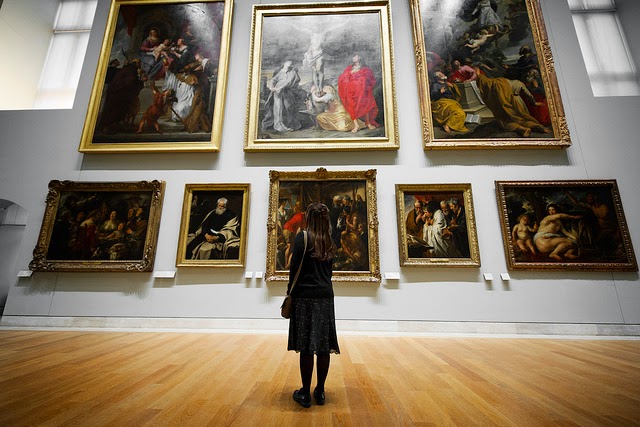
Art Appreciation Boosts Stroke Recovery Physically And Psychologically


By: Anna Agoncillo
Image Credits: Dustin Gaffke via Flickr
Art therapy that fosters creativity can help several of mental and physical conditions such as anxiety, Post Traumatic Stress Disorder (PTSD), cancer, and stroke. Truly, expressive art benefits people with serious disorders. 

Art therapy has been proven to be successful in ways that are different from the traditional therapies. 

Three years ago, a study found that stroke survivors who enjoyed painting, music, and theater had better recovery than patients who did not. 

Psychology, Children, And Art: 5 Benefits of Art Therapy on Children

art
 By: Anna Agoncillo


What is Art Therapy?

According to American Art Therapy Association (2014): "Art therapy is a mental health profession that uses the creative process of art making to improve and enhance the physical, mental and emotional well-being of individuals of all ages." 
Image Credits: Stephanie Sicore via Flickr
Art therapy has been proven to improve the well being of individuals by using various mediums such as painting, sculpting, singing, and drawing. Art therapy is especially beneficial for children since they are naturally more imaginative, artistic, and creative. They can express their feelings more through art than through words. 

In that note here are 5 Benefits of Art Therapy on Children and a bonus recommendation of a Paint-By-Numbers Kit by Paintastic Art Craft that your Children will enjoy. 

1. PROMOTES SELF-EXPRESSION WITH LITTLE TO NO BOUNDS

Art therapy is a one of a kind therapy that can be used in counseling or diagnosis because of its creative nature that has little to no bounds. It allows the children to manifest their own feelings and emotions that they might have repressed.

Like MP on Facebook